01
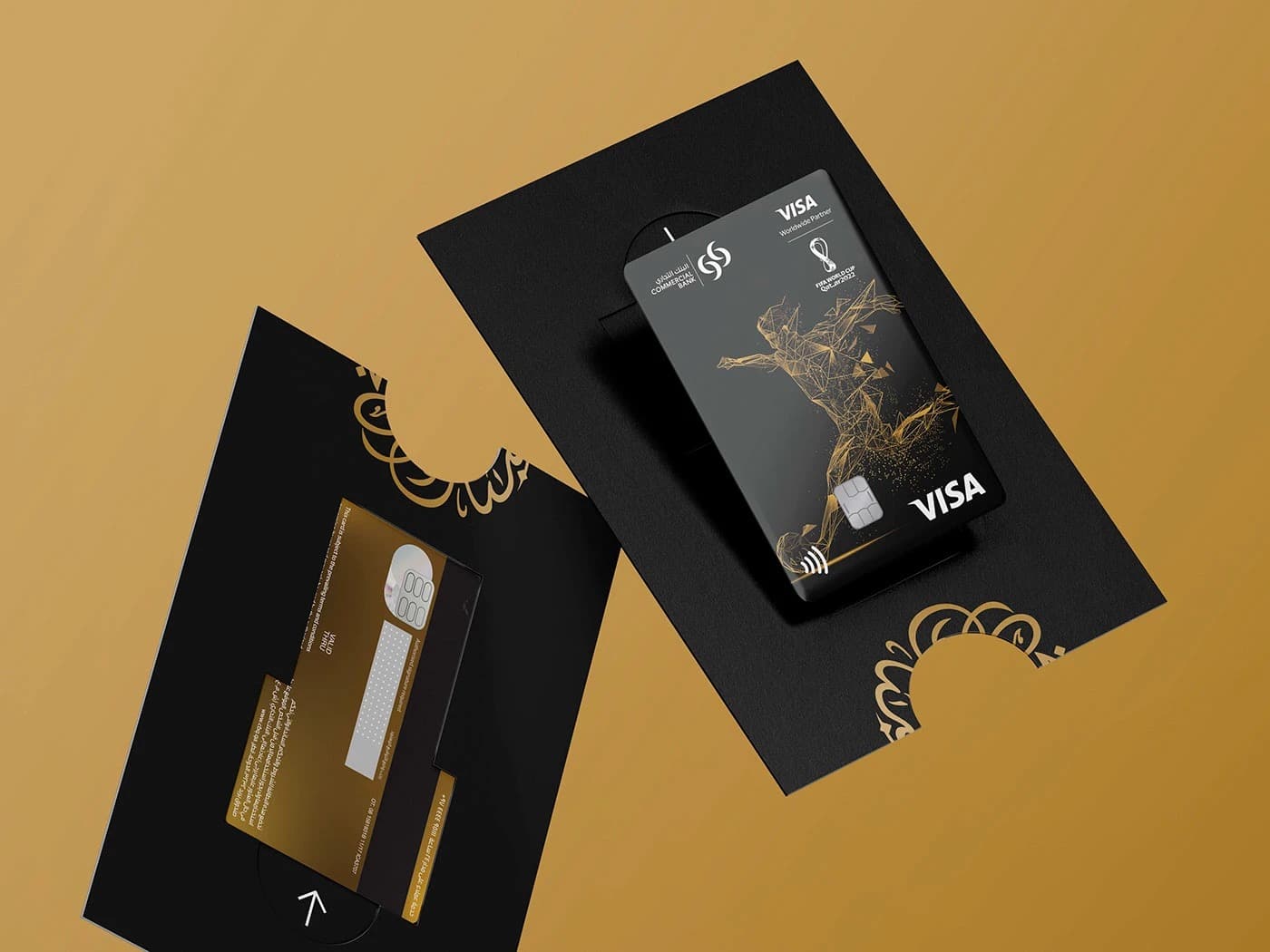
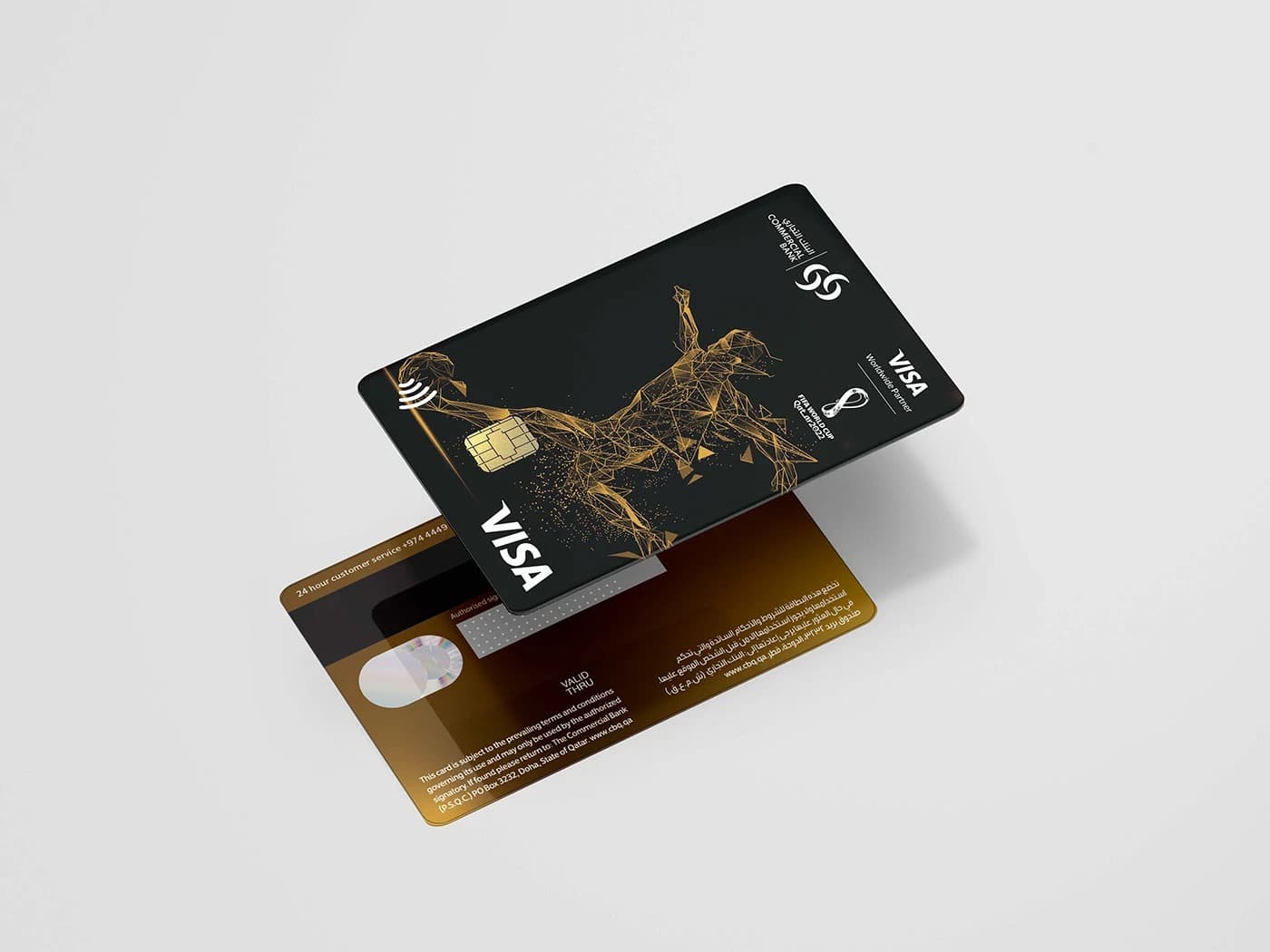
Navy. Embossed. One gold chip. The object had to carry the frame alone.
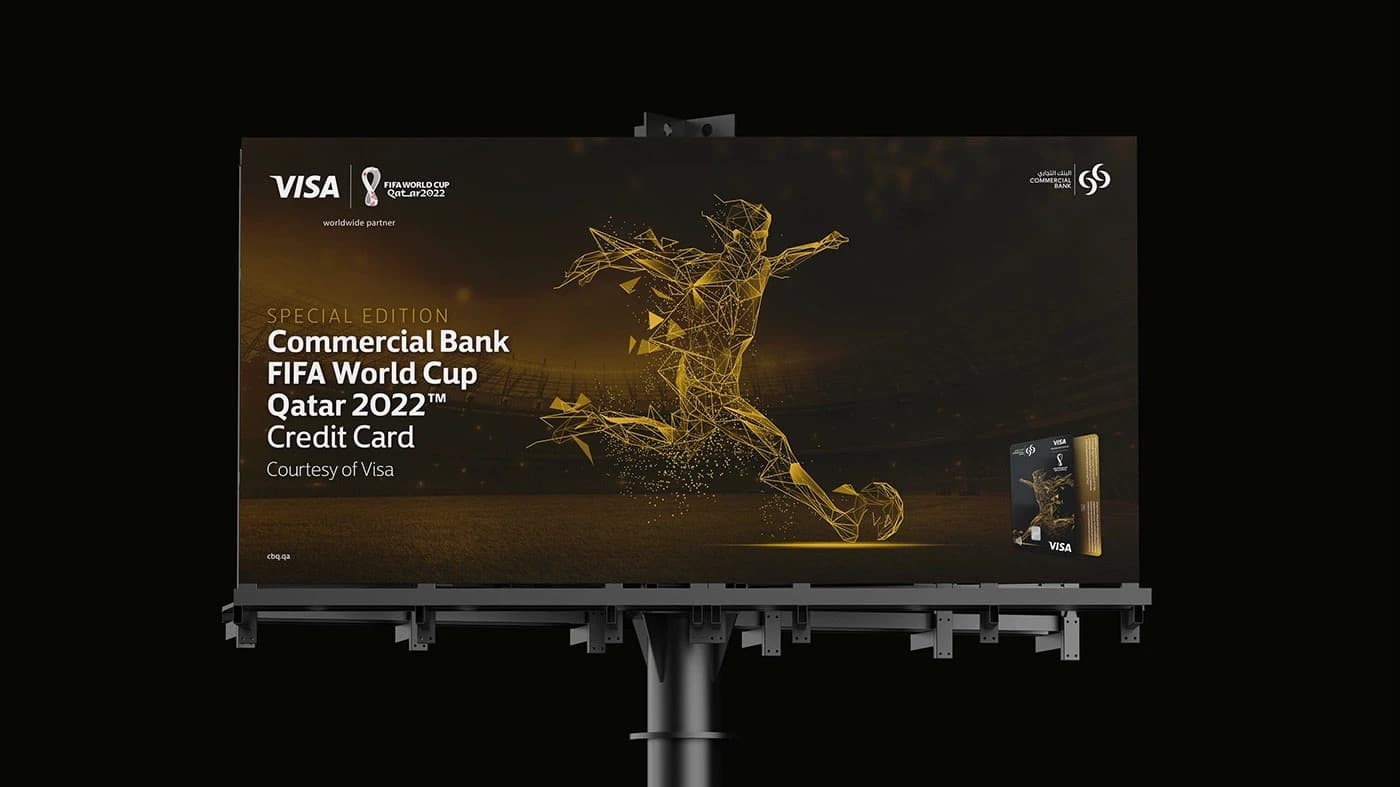
CBQ came to us nine months before FIFA World Cup 2022 — not with a campaign brief, but with a product. A limited-edition payment card tied to the most-watched sporting event in history, issued to priority customers and the arriving global traveler.
The problem wasn't awareness. Qatar was about to receive a million visitors and every brand in the country was shouting. The problem was making a piece of plastic feel like it belonged in that moment — a credential that read as a cultural object, not a loyalty promo.
A co-branded lockup with FIFA's official partner mark, where neither brand was allowed to dominate the other.
Arabic and English set with equal optical weight — on the card, in digital onboarding, and across every OOH surface.
FIFA asset governance: zero tolerance on mark misuse, three-week approval cycles, no post-launch flexibility.
A system that held from a 3.5mm embossed chip to a 48-sheet OOH — the same brand readable at both extremes.
Nine months from approval to rollout across 32 branches, two airports, and three broadcast windows.
Both marks sit at equal optical weight. A 1-pixel rule between them becomes the third brand element — not a divider, a hinge. Neither logo surrenders hierarchy at any scale, from embossed chip to 48-sheet.
Neue Haas Grotesk + 29LT Zarid Sans. Matched x-heights and optical weights.
CBQ navy as anchor, field color, and voice. FIFA gold capped at 8% usage — applied to the chip, the rule, the callout. The constraint kept the card from reading as commemorative coinage.
Every transition runs on the rhythm of a ball pass: 240ms in, 340ms out. Named the "pass curve" in the system documentation so the in-house team could extend it after we handed off.
A 12-column grid with a 4mm horizontal inset reserved for bilingual parity. Removed the temptation to squeeze Arabic to fit English — the single most frequent failure of bilingual banking collateral in the region.
Navy. Embossed. One gold chip. The object had to carry the frame alone.
Arabic left, English right — identical weight. Shown side-by-side as proof of parity.
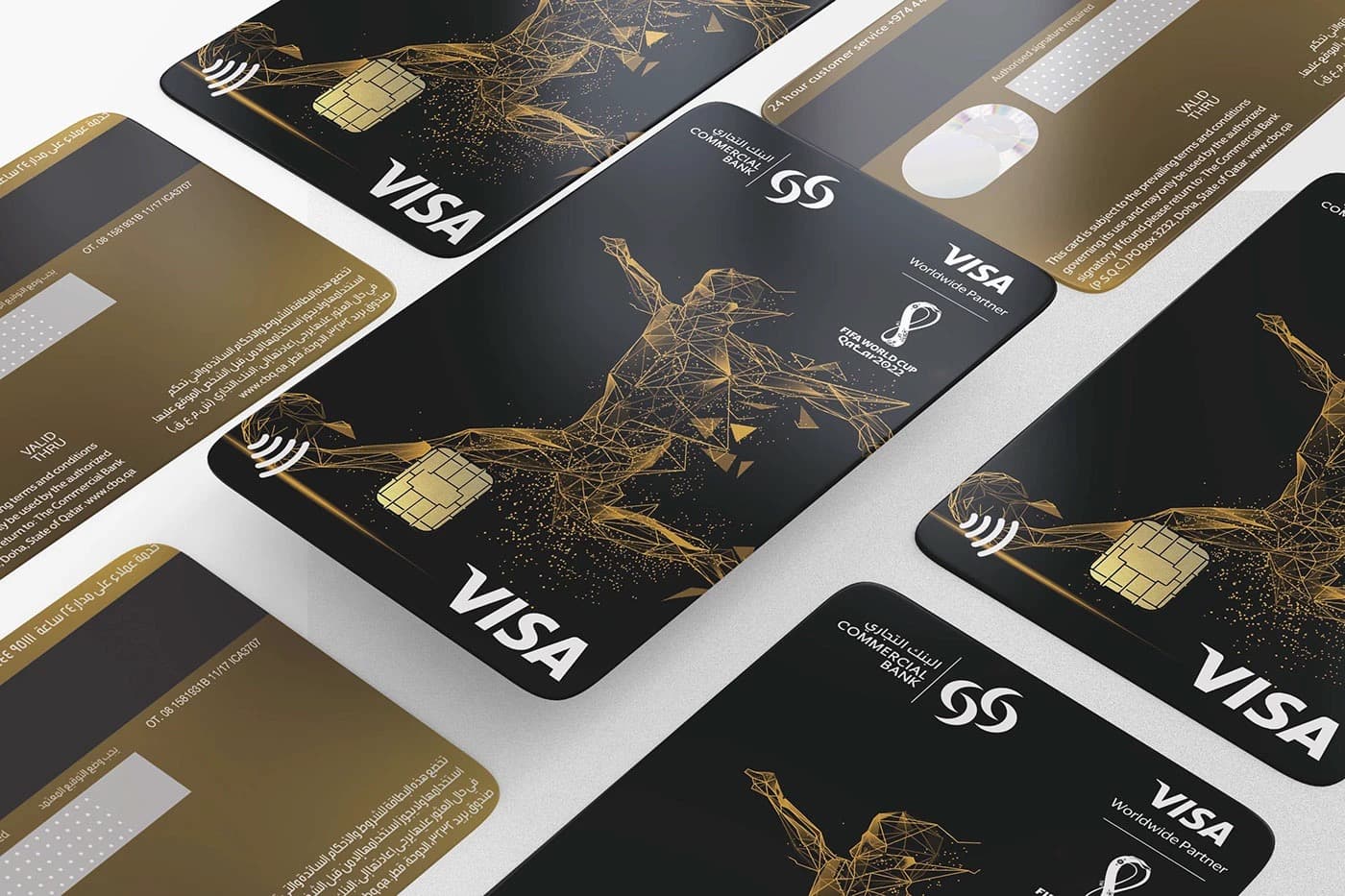
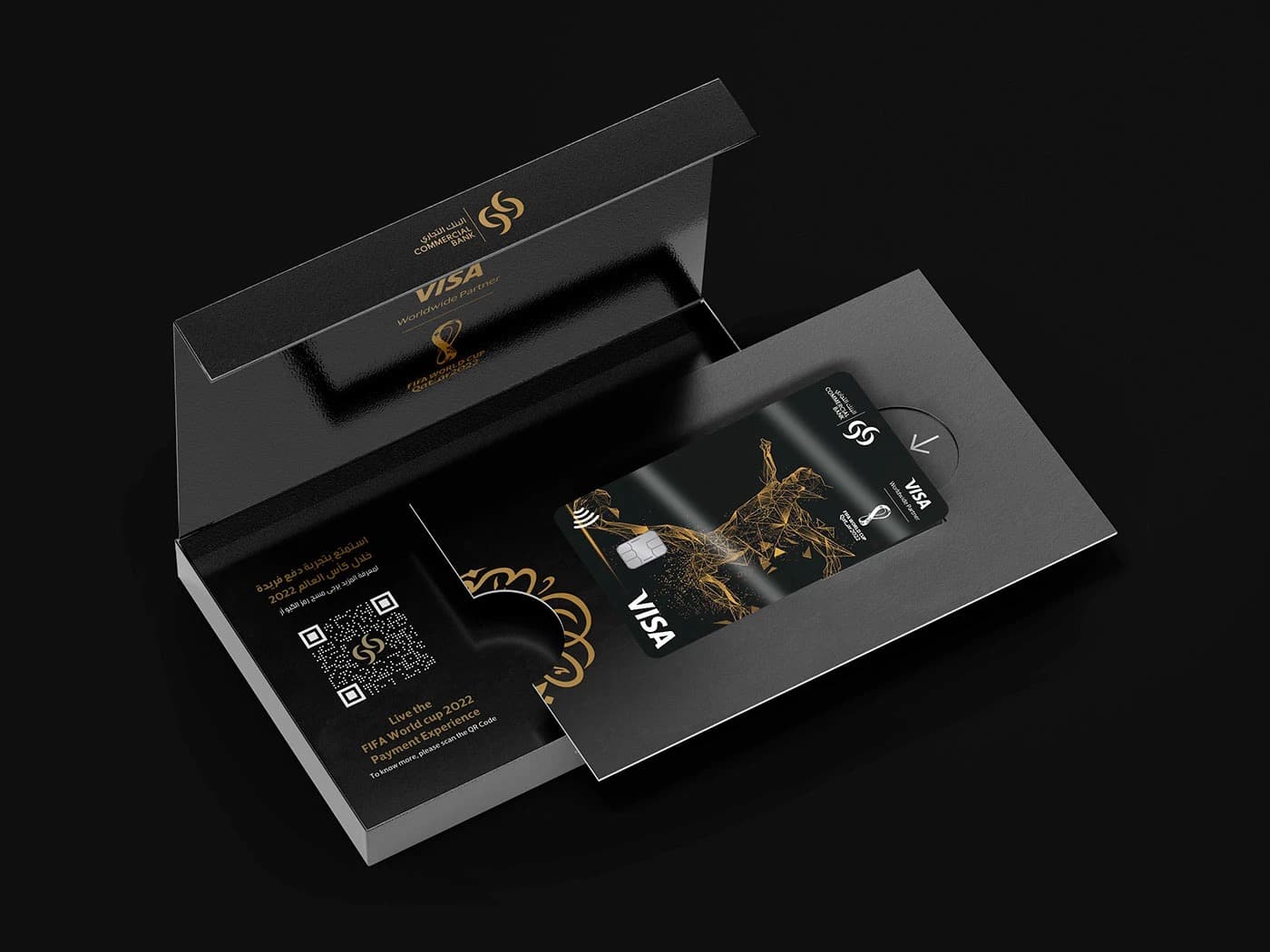
Every bilingual bank decision comes down to the same question: whose script sets the rhythm? The card had to refuse that question by answering it twice.
In-branch takeover — the brand applied as architecture, not wallpaper. Wayfinding, teller banners, welcome threshold.
Digital onboarding — same rhythm across iOS and Android. Platform-native only where it helped the user.
West Bay. Hamad arrivals. Souq approach. The card placed where the audience was already looking.
The governance document. The most under-credited deliverable — and the one that lets the system run without us.